On a recent trip to Paris, I walked into a cheese shop and asked the owner to pick out a few cheeses for me. One of them was a soft cheese. Before handing it over, he paused and asked: “When will you be eating this — today, or in a couple of days?”
When I said I’d eat it later in the week, he rummaged around the stack until he found the one he thought would be perfect. He wasn’t checking expiry dates. He was checking ripeness. A soft cheese can be chalky and firm one day, gloriously oozy the next, and overripe the day after. What he gave me wasn’t just a piece of cheese — it was a recommendation tailored to my timing.
That moment stuck with me. If you’re a cheese newbie and not sure where to start, here’s the best advice I can give you: ask the expert.
Why Ask the Expert?
Cheesemongers know their stock like parents know their kids. They can tell you which wheel of Brie is ready to burst open tonight, and which one will be perfect by the weekend. They know what’s local, what’s seasonal, and what’s worth trying even if it doesn’t look familiar.
Unlike buying from a supermarket shelf, where you grab what’s wrapped and labeled, buying from a cheesemonger is a conversation. By asking, you’re not just buying food — you’re stepping into a story.
My Philosophy: Let Them Choose
Over the years I’ve made a habit of it: I walk into a shop, smile, and ask for a few of their favorites. Sometimes the cheesemonger speaks fluent English. Other times it’s smiles, gestures, and the word fromage. Once, at a shop on a Paris side street, the nice lady behind the counter could not speak any English. We struggled a bit as I said “You pick.” She finally ran to grab her husband, who did speak some English, and worked the fruit stand across the street. I should have grabbed my phone and pulled up a translator, but it all worked out.
In smaller towns, I’ll ask specifically for local cheeses. That’s often where the hidden gems appear — the cheeses that never make it into the glossy guidebooks but tell you more about a region than any souvenir could.
Examples from the Road
- Paris: The ripeness story — proof that timing matters.
- Stornoway (Scotland): Asking for local cheeses led to discovering flavors rooted in the Hebrides, rustic and unlike anything you’d find in a Paris market. I got a wonderful smoked Orkney cheese at deli/cheese shop about a half mile from the bay and tried to chase down that variety again all over the outer Hebrides.
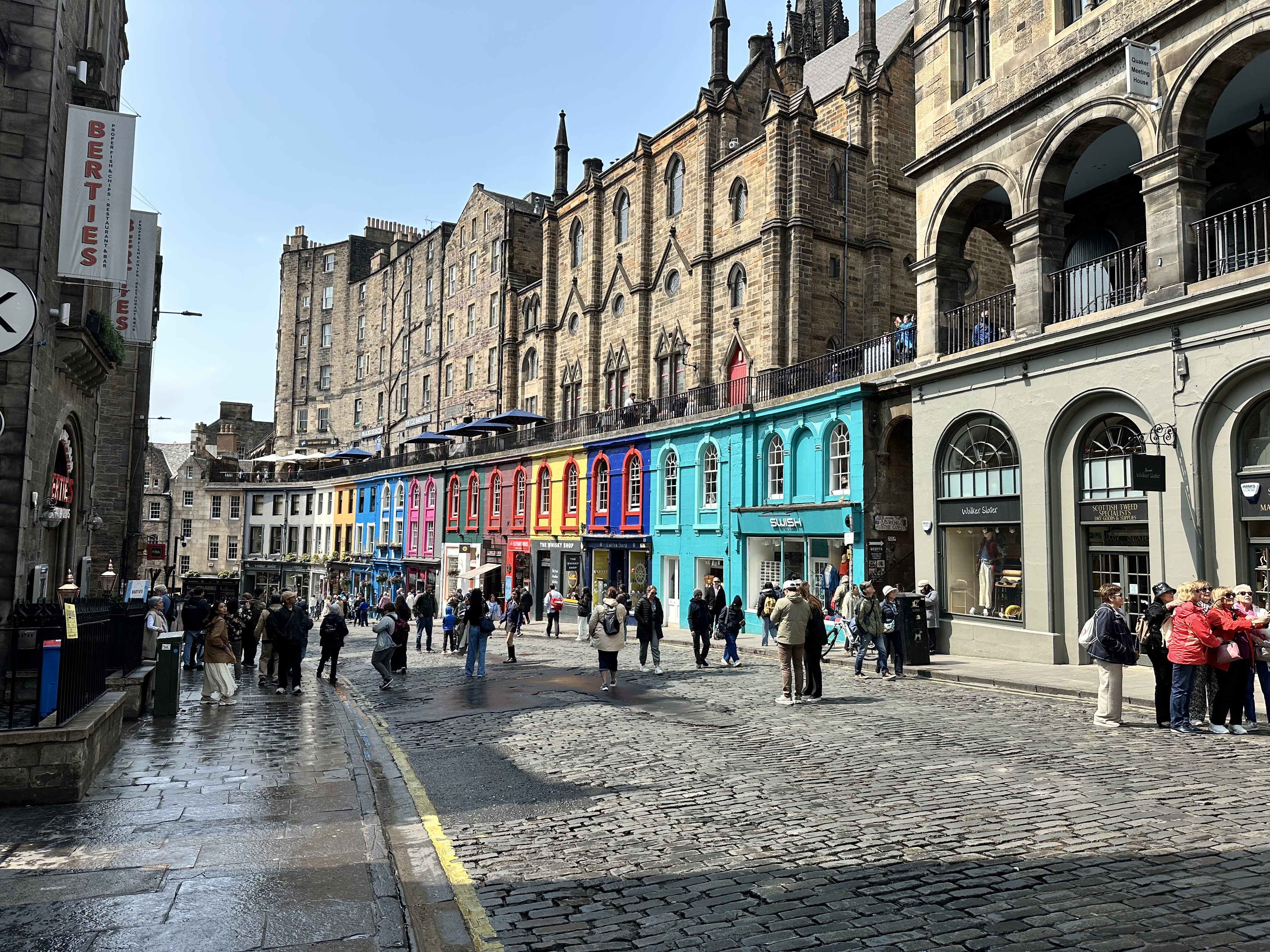
- Edinburgh (Mellis Cheese, Victoria Street): I asked for several favorites. The cheesemonger loaded me up with five or six chunks. Then he laughed and admitted, “You pretty much have my entire selection now.” It turned out to be a perfect sampler of Scottish cheese in one bag.
Tips for Cheese Newbies
- Don’t be shy. Cheesemongers want to help.
- Start with variety. Try one soft, one hard, one local, and one wild card.
- Buy small wedges. Most shops are happy to cut smaller pieces so you can taste more without overcommitting.
- Take notes. (Grab my free Cheese Tasting Notes Sheet to make it easier.)
- Expect hits and misses. Not every cheese will be love at first bite — and that’s part of the fun.
- If the shop is busy, hang tight. I always try to give deference to the locals. They usually know what they want, though they might stop and discuss the weather a bit. Even if the shopkeeper is waiting on me and someone else enters, I will often tell them I’ll wait. I realize that I’m taking up more time than his or her average shopper, so I’m never in a rush.
Download my Cheese Tasting Notes Sheet and start building your own personal cheese library.
Final Thought
Cheese isn’t just food — it’s culture, geography, and history wrapped in a rind. You don’t need to be an expert to explore it. You just need curiosity, and the courage to ask. The cheesemonger is your best guide.
Leave a Reply